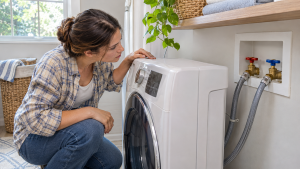
The First Fill Is Not the Whole Wash
A selected temperature is a target for a wash, not a promise that the first water you see will feel hot. Whirlpool explains that some washers dispense cold water at the beginning of every cycle and then sense temperature in the tub. It also notes that incoming tap temperature affects how much hot water a machine asks for. A warm cycle can therefore feel different from the older washer a household replaced. The important observation is what the model is programmed to do, not a hand held briefly near a stream.
A genuine no-hot-water condition has several possible sources. The household hot-water supply may be depleted, a faucet behind the washer may be closed, a hose may be connected to the wrong inlet after installation, or the hot inlet valve may fail. A temperature sensor or control could also misread conditions. Those possibilities are not interchangeable; a technician should test rather than replace a valve by guesswork. Whirlpool’s top-load guidance specifically calls for checking hose connections, hot-water distance, and cycle selection.
A washer that cannot fill at all belongs in the washer-fill guide. Clothes that remain soapy after a complete rinse are a separate rinsing problem. If water escapes at a hose, follow the washer-leak guide and stop running loads. This article focuses on temperature selection when the washer otherwise runs.
For model-specific service after these checks, see Washer repair, Washer not filling.
Reading the Clues
Use a fair comparison. Note the cycle name, the temperature selection, whether a sanitize or steam option changes the behavior, and whether warm water reaches the nearby sink at the same time of day. Some cycles limit available temperatures to protect fabrics; a control may silently adjust a requested setting. Do not put a hand inside an operating machine or open a locked door to sample wash water. A homeowner can observe the panel, supply faucets, and household hot water without working on energized valves. If the washer was recently installed or moved, the installer should confirm hose routing; do not loosen an active connection to prove a theory. If the cycle instead fails at spin, the washer spin guide follows that different symptom.
Step-by-Step Troubleshooting
1. Stop for leaks or electrical warnings
Water under the washer, a hot cord, burning smell, or repeated breaker trip changes the task. Stop the cycle and keep clear of wet electrical areas.
2. Record the selected cycle
Hot, Warm, and Cold may not be available on every program. Photograph the display and compare the manual’s cycle chart before changing options.
3. Check the first-fill assumption
Do not judge the entire cycle by its first seconds. Whirlpool notes that some models start with cold water while controlling temperature later in the tub.
4. Confirm hot water at a nearby faucet
Run the sink normally and check whether household hot water arrives. If it does not, the issue may be the water heater or supply rather than the washer.
5. Consider back-to-back loads
Several hot loads can exhaust a household tank faster than it recovers. Wait for hot water to return, then compare one appropriate cycle.
6. Look at the accessible shutoff valves
If both faucets are visible and dry, confirm they are fully open. Do not reach behind a moving washer or force a corroded valve.
7. Verify hose labels without disconnecting
A recent installation may have hot and cold hoses reversed. Trace visible labels from faucet to inlet; have an installer or technician correct anything uncertain.
8. Use one ordinary comparison load
Select a fabric-safe cycle that should allow Hot or Warm, with a modest load. Do not wash delicate garments hot solely to test the appliance.
9. Note fill speed and errors
A slow fill or hot-water-related code points beyond a temperature impression. Record the exact message rather than clearing it repeatedly.
10. Call if the pattern persists
When household hot water is available, supply faucets are open, and an approved Hot cycle remains cold, a technician can test the inlet valve, sensor, and control.
Brand-Specific Considerations
Whirlpool and Maytag: Whirlpool documents temperature sensing and cold water at the start of some cycles. It advises checking hose routing and household hot-water availability on no-warm complaints. Model-specific help is available through Whirlpool appliance repair.
LG and Samsung: Automatic temperature control, steam, and sanitation modes differ by series. Check the model’s program chart rather than treating every Warm label as the same target.
GE: A temperature option may be limited by the selected cycle. Record the exact setting and whether the machine fills normally before requesting valve diagnosis.
Bosch and Miele: Some compact machines heat water internally or use different inlet arrangements. A two-hose assumption may be wrong; use the exact manual.
Repair vs. Replace Guidance
An incorrect setting, closed faucet, or depleted household hot water needs no washer part. A faulty inlet valve or temperature sensor may be repairable on a machine that otherwise washes, drains, and spins well. Ask for a diagnosis that separates supply plumbing from appliance control. Compare replacement if an older washer also has bearing noise, repeated leaks, major control faults, and a high repair estimate. A cold-feeling first fill alone is not a replacement reason.
Cost Expectations
A cycle setting or a closed hot-water valve can be corrected without appliance parts. A service estimate changes if the problem is a restricted inlet screen, failed valve, temperature sensor, or control. The technician should confirm what water reaches the machine before pricing an internal part. If the home hot-water supply is weak, repairing the washer will not make the plumbing deliver hotter water. Note whether the issue affects every cycle or only an energy-saving program; that distinction can prevent an unnecessary visit or parts order.
Why Choose Universal Appliance Repair
Universal Appliance Repair can test the washer’s fill and temperature controls after you have confirmed the selected cycle, hot tap supply, and accessible hose connections. Share the model, selected temperature, and whether the laundry has been coming out unusually cold or poorly cleaned. A washer repair appointment is most useful when the supply is sound but the machine still cannot make the requested fill.
Appliance Lifespan Table
Refrigerator: 10-15 years. Maintenance priority: clean coils, protect door seals, and keep temperatures steady.
Freezer: 10-20 years. Maintenance priority: keep vents clear, check gasket contact, and defrost models that require manual defrosting.
Dishwasher: 8-12 years. Maintenance priority: clean the filter, inspect spray arms, and avoid blocked drain paths.
Washing machine: 8-12 years. Maintenance priority: avoid overloading, use the right detergent amount, and inspect hoses.
Dryer: 10-13 years. Maintenance priority: clean the lint filter, vent path, and exterior termination.
Range or oven: 10-15 years. Maintenance priority: keep burners, igniters, caps, racks, and controls clean.
Maintenance Checklist
- Keep both supply faucets in their normal open position.
- Inspect visible hoses for bulges or damp fittings.
- Use fabric-safe temperature selections from the care labels.
- Avoid repeated hot loads when household hot water is depleted.
- Record recurring fill or temperature errors.
Safety Section
Do not disconnect a pressurized hose, move a heavy washer alone, or reach behind a running machine. Hot water can scald, and a leak near an outlet creates electrical danger. If a connection is wet, stop use and shut off water only when safely accessible. Do not bypass a door lock or open internal valve wiring for a temperature test.
What to Tell the Technician
Give the model number, cycle and temperature setting, whether nearby hot water was available, whether the washer was recently installed, visible hose routing, fill speed, and any error code. Report whether only the initial fill was cold or the entire appropriate cycle seemed cold.
Key Takeaways
- Cold water at the start can be normal on a temperature-controlled washer.
- Check cycle permissions and household hot water before blaming a valve.
- Inspect hose routing without disconnecting pressurized connections.
- Persistent cold Hot cycles or fill errors warrant professional diagnosis.
Homeowner Actionability Score
24/25. The homeowner can distinguish normal mixing from a supply or appliance fault, make safe exterior checks, and identify when pressurized or electrical work is beyond DIY.
Editorial Standard
This article was checked against manufacturer guidance and the Universal Appliance Repair Knowledge Base v6.0 for safe homeowner actions, clear stop points, and source accuracy.
Sources and Further Reading
Author Information
The Universal Appliance Repair Certified Expert Team consists of experienced appliance repair professionals with more than 25 years of combined hands-on experience servicing residential appliances. Articles are reviewed using manufacturer guidance, current industry best practices, and practical field experience.