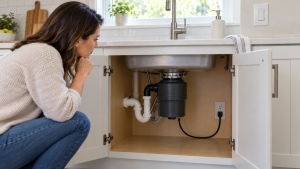
Silence Narrows the Question
A disposal that hums is receiving at least some power. A disposal that is completely silent may not be receiving power at all. That distinction saves time and keeps a homeowner from trying to clear a jam that has not been established. InSinkErator’s homeowner troubleshooting starts with the circuit, switch, and whether a plugged-in unit’s outlet works. Its reset guidance also explains that the motor overload protector can shut the machine off after a jam or an extended run.
Under a kitchen sink, the control may be a wall switch, a countertop air switch, or a switched receptacle. A nearby GFCI may protect the circuit. A plug that looks seated can loosen, while a breaker that trips again is not a nuisance to be repeatedly reset. Do not assume that the reset button is a general on switch. It is protection, and repeated tripping deserves a cause.
Keep the symptom boundaries clear. The InSinkErator’s jam guidance addresses a motor that tries to turn. The disposal leak guide applies if the cabinet is wet. If a dishwasher also backs up, read the dishwasher drain guide before treating the disposal alone as the whole problem.
For repair help, see Appliance repair; for routine care, read common garbage disposal mistakes.
Reading the Clues
A silent unit after a large load of scraps suggests a different sequence from silence after an under-sink leak. In the first case, the overload may have opened because the motor strained. In the second, any wet electrical component changes the priority to safety. Do not test the outlet merely because a small appliance test is described in a support article; that step assumes a completely dry cabinet. Likewise, a dishwasher that drains into the same plumbing can leave a homeowner thinking the disposal is dead when the more visible symptom is a backed-up sink. The dishwasher repair service can address a true dishwasher fault, while the disposal and branch drain still need separate observation. Check service areas when arranging a visit rather than disassembling plumbing beside a live outlet.
Step-by-Step Troubleshooting
1. Turn off the disposal switch
Start with the switch in the off position. Do not reach into the disposal opening to check whether the blades move. The grinding chamber contains sharp stationary edges even when the motor is off.
2. Check for moisture before touching anything electrical
Open the cabinet and look for drips on the cord, outlet, switch module, or bottom of the unit. If any electrical area is wet, stop. Avoid the cabinet’s electrical parts and arrange qualified help; the leak guide explains how to describe the source without running the unit.
3. Identify plug-in or hardwired power
A plug-in disposal usually has a cord leading to an outlet in the cabinet. A hardwired unit does not invite homeowner wiring checks. Do not open an electrical cover or pull a hardwired unit away from its mount.
4. Confirm the plug is seated only if everything is dry
With the switch off, visually confirm that a plug-in unit has a secure cord and a seated plug. Do not tug a frayed cable, use an extension cord, or keep moving a plug that seems intermittent.
5. Check the breaker and GFCI once
If the breaker or a GFCI has tripped, follow its normal reset procedure one time. A second trip is evidence of an electrical fault, overload, or moisture. Stop repeated attempts and call an electrician or appliance professional as appropriate.
6. Test a dry switched outlet carefully
InSinkErator suggests unplugging a plug-in disposal and checking the outlet with a small working device. If the outlet is controlled by a switch, compare on and off. Do this only with dry hands and a dry cabinet. If the test device never works, the supply or switch needs electrical diagnosis.
7. Let an overloaded motor cool
An overheated disposal can be silent until its protection is reset. InSinkErator tells owners to switch it off and allow cooling before pressing the red reset on applicable models. Find the button using the model manual rather than feeling around a wet cabinet.
8. Press reset once as the manual directs
If the button is out and the cabinet is dry, follow the exact reset directions for the model. If it immediately trips again, do not keep pressing it. A jam or motor problem may still be present, and repeated attempts can worsen it.
9. Make one brief sound check
With hands clear of the opening, test the switch briefly. Silence, a click, and a hum are different clues. If it now hums without grinding, turn it off and use the manufacturer’s jam guidance; do not keep running it.
10. Stop when power and reset are not the answer
A powered outlet with a silent disposal, a switch that works intermittently, or repeated trips calls for professional diagnosis. Do not remove the unit, replace a switch, or touch internal wiring as a homeowner test.
Brand-Specific Considerations
InSinkErator: Most models have overload protection, but reset location and cooling instructions vary. The official support guide distinguishes plug-in power checks from hardwired units.
Moen and Waste King: Button position, plug arrangement, and mounting hardware vary by series. Use the exact model manual before trying a reset or under-sink access.
KitchenAid and Whirlpool: Some units share familiar reset and switch patterns, but never assume a red button or wrench socket is present on a particular model.
Air-switch-equipped installations: A countertop button may operate a separate under-sink switch module. If that module or its receptacle is wet, avoid touching it and call qualified service.
Repair vs. Replace Guidance
A loose plug, tripped GFCI, or one-time overload may need no appliance repair after the cause is corrected. A faulty wall switch, air-switch module, or receptacle belongs to an electrician or qualified installer; a failed disposal motor or internal electrical fault belongs to disposal service. Replacement often makes more sense for an older unit with recurrent overloads, corrosion, leaks, or a burned motor. Do not buy a new disposal until the supply side has been separated from the appliance fault.
Appliance Lifespan Table
Refrigerator: 10-15 years. Maintenance priority: clean coils, protect door seals, and keep temperatures steady.
Freezer: 10-20 years. Maintenance priority: keep vents clear, check gasket contact, and defrost models that require manual defrosting.
Dishwasher: 8-12 years. Maintenance priority: clean the filter, inspect spray arms, and avoid blocked drain paths.
Washing machine: 8-12 years. Maintenance priority: avoid overloading, use the right detergent amount, and inspect hoses.
Dryer: 10-13 years. Maintenance priority: clean the lint filter, vent path, and exterior termination.
Range or oven: 10-15 years. Maintenance priority: keep burners, igniters, caps, racks, and controls clean.
Maintenance Checklist
- Keep the cabinet under the sink dry and inspect it after leaks.
- Feed food gradually and run water as the model directs.
- Avoid grinding hard objects and non-food material.
- Do not keep a disposal running while jammed or hot.
- Note repeated breaker or overload trips rather than repeatedly resetting them.
Safety Section
Never put a hand into the disposal opening. Keep the switch off while inspecting. Do not touch a wet cord, outlet, air-switch module, or exposed wiring; water changes a simple power check into an electrical hazard. Do not open a wiring cover, defeat an overload protector, or repeatedly reset a tripping breaker. A burning smell, smoke, or heat at the outlet is a stop-use condition.
What to Tell the Technician
Describe whether the disposal is silent, clicks, or hums; whether it is plug-in or hardwired; whether the outlet’s test device works; and whether a breaker, GFCI, or overload button tripped. Report any leak, burning smell, or recent jam. A photo of the model label and dry installation can help plan the visit.
Key Takeaways
- A silent disposal first calls for a power-path check, not a jam diagnosis.
- Perform only dry, exterior, model-approved checks.
- One overload reset can be reasonable; repeated trips are a repair clue.
- A dead outlet needs electrical diagnosis, while a powered silent unit needs disposal diagnosis.
Homeowner Actionability Score
24/25. The reader can separate silence from a hum, identify dry power connections, perform one normal protection reset, and know when a supply fault calls for an electrician. Wiring and motor tests remain professional.
Editorial Standard
This article was checked against manufacturer guidance and the Universal Appliance Repair Knowledge Base v6.0 for safe homeowner actions, clear stop points, and source accuracy.
Sources and Further Reading
Author Information
The Universal Appliance Repair Certified Expert Team consists of experienced appliance repair professionals with more than 25 years of combined hands-on experience servicing residential appliances. Articles are reviewed using manufacturer guidance, current industry best practices, and practical field experience.