Introduction
A dishwasher that will not drain leaves dirty water, odors, and dishes that never feel clean. The cause may be a clogged filter or blocked disposal connection. It may also involve a drain pump, check valve, hose, control, or installation issue.
This guide explains safe checks, why dishwashers fail to drain, and when to schedule [dishwasher repair](/dishwasher-repair/).
Why This Happens
During draining, the dishwasher sends water from the sump through the drain pump and hose into the sink drain, disposal, or air gap. If food, grease, glass, a kinked hose, or sink blockage interrupts that path, water remains in the tub.
Some no-drain symptoms start outside the dishwasher. A clogged disposal, blocked air gap, or missing high loop can send water back into the tub. Other failures are internal, including a jammed pump impeller, failed drain motor, stuck check valve, bad float switch, or control problem.
Step-by-Step Troubleshooting
1. Cancel and Run Drain
Use the cancel or drain command on the control panel. If the pump runs and water leaves, the issue may have been a paused cycle. If the pump hums but water stays inside, stop and move to safe checks.
2. Remove Standing Water Safely
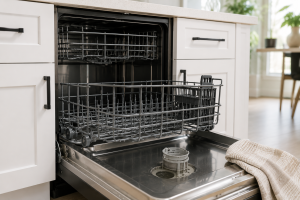
Turn the dishwasher off. Use a cup, towels, or small container to remove enough water to access the filter. Wear gloves because glass, bones, labels, and sharp debris can collect near the sump.
3. Clean the Filter
Remove and rinse the filter according to the owner’s manual. Many newer dishwashers use manual-clean filters. ENERGY STAR recommends checking the manual and cleaning dishwasher filters for efficient operation: ENERGY STAR dishwasher guidance.
4. Check the Drain Basket
Look around the sump and drain basket with a flashlight. Remove visible food, labels, toothpicks, and debris. Do not reach into a pump opening blindly. Broken glass can hide under water.
5. Check the Garbage Disposal
If the dishwasher drains into a disposal, run the disposal with cold water. If the disposal was recently installed, the dishwasher knockout plug may still be in place. That plug must be removed for the dishwasher to drain into the disposal.
6. Inspect the Air Gap
If your sink has an air gap, remove the cap and check for debris. A clogged air gap can cause water to spill onto the sink or return to the dishwasher. Clean only accessible debris and avoid forcing tools deep into the line.
7. Look at the Drain Hose
Open the cabinet under the sink. Check whether the drain hose is kinked, crushed, disconnected, or sagging. Many installations need a high loop under the counter to help prevent dirty water from flowing back into the dishwasher.
8. Check the Sink Drain
A dishwasher cannot drain well into a clogged sink line. If the sink drains slowly, clear the sink or disposal side first. Avoid pouring harsh chemicals into a dishwasher drain path because they can damage parts and create safety risks.
9. Listen for Pump Problems
A working drain pump usually makes a steady motor sound during draining. Humming, clicking, grinding, or silence can point to a jammed impeller, failed pump, wiring issue, or control fault. This is where DIY should usually stop.
10. Watch for Repeat Water Return
If the dishwasher drains but water returns later, suspect backflow. Causes include a missing high loop, bad check valve, clogged drain hose, disposal issue, or sink drain problem. Repeated backflow needs proper diagnosis.
Safety Tip
Turn power off before reaching near the filter, sump, or lower spray-arm area. Keep towels nearby and avoid touching wiring, pumps, or wet electrical parts. If you see water under the dishwasher or near the junction box, stop and schedule service.
When DIY Should Stop
DIY should stop when water is under the appliance, the pump hums without draining, the drain hose must be disconnected, the dishwasher leaks during drain, or electrical parts may be wet. Professional [appliance repair](/appliance-repair/) is safer when the repair involves wiring, pump testing, hose removal, or cabinet access.
Repair vs. Replace Guidance
Repair usually makes sense: The dishwasher is under 8 years old and likely needs filter cleaning, hose correction, air gap cleaning, a drain pump, check valve, float switch, or control diagnosis.
Get a diagnosis first: The dishwasher has multiple symptoms, intermittent draining, leaks, error codes, or a suspected installation problem.
Replacement may be smarter: The dishwasher is 10-12 years old, has tub damage, repeated pump failures, major leaks, rust, control failure, or poor cleaning performance beyond the drain issue.
Cost Expectations
Dishwasher drain repair cost depends on brand, age, access, installation, parts availability, and whether the problem is in the dishwasher or the sink/disposal drain path. A clogged filter is very different from a failed drain pump or hidden hose restriction. Confirm the cause before replacing parts.
Appliance Lifespan Guide
Dishwasher: 8-12 years. Priority: Clean the filter and inspect spray arms.
Garbage disposal: 8-15 years. Priority: Run cold water and avoid hard debris.
Washing machine: 8-12 years. Priority: Avoid overloading and check hoses.
Dryer: 10-13 years. Priority: Clean lint screen, duct, and exterior vent.
Refrigerator: 10-15 years. Priority: Clean coils and protect door seals.
Maintenance Checklist
- Scrape large food scraps before loading.
- Clean the dishwasher filter regularly.
- Check the air gap if water backs up.
- Run the garbage disposal before starting the dishwasher.
- Avoid overusing detergent.
- Keep labels, glass, bones, and toothpicks out of the tub.
- Inspect visible drain hose routing under the sink.
- Schedule service when drain problems repeat.
Brand-Specific Considerations
Bosch: filters, drain pumps, check valves, and installation routing are common no-drain checks. For brand help, see [Bosch appliance repair](/bosch-appliance-repair/).
Whirlpool, Maytag, KitchenAid, and Amana: drain pumps, filters, disposal connections, and controls are common diagnostic areas. See [KitchenAid appliance repair](/kitchenaid-appliance-repair/) if relevant.
GE and Hotpoint: drain solenoids on some older designs, pumps, and control issues can cause standing water.
Samsung and LG: error codes, pump failures, hose restrictions, and installation issues can overlap.
Frigidaire and Electrolux: filters, drain pumps, and check valves can create repeat no-drain symptoms.
Record the model and serial number before booking service.
Why Choose Universal Appliance Repair
Universal Appliance Repair focuses on finding the true drain restriction before replacing parts. A technician can test the pump, check valve, float, controls, hose routing, sink connection, and installation conditions. To get help, visit [schedule service](/schedule-service/) or check our [service areas](/service-areas/).
Key Takeaways
- A dishwasher that will not drain may have a clogged filter, blocked disposal, air gap problem, kinked hose, bad check valve, failed pump, or control issue.
- Homeowners can safely clean the filter, check the air gap, inspect visible hoses, and confirm the sink/disposal drains.
- Stop DIY work if water is near wiring, the pump hums, leaks appear, or hose removal is required.
- Repair is often worthwhile for newer dishwashers with drain pump, filter, hose, or check-valve issues.