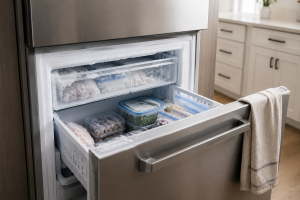
Introduction
A little frost can happen when moist air enters a freezer, but heavy frost is not something to ignore. Frost buildup blocks airflow, reduces storage space, raises energy use, and can cause food temperatures to become unsafe.
This guide explains why a freezer frosts up even when the door seems closed, what homeowners can check safely, and when to schedule [freezer repair](/freezer-repair/) or [refrigerator repair](/refrigerator-repair/).
Why This Happens
A freezer keeps food frozen by moving heat out of the cabinet while circulating cold air across the evaporator. Moisture becomes frost when warm, humid air enters or when the defrost system fails to clear normal frost from the evaporator.
The most common causes are gasket leaks, blocked vents, frequent door openings, warm food loads, poor packaging, incorrect temperature settings, failed defrost parts, evaporator fan problems, clogged defrost drains, and control faults. In refrigerator-freezer combos, a freezer airflow or defrost issue can also make the fresh-food section warm.
Step-by-Step Troubleshooting
1. Identify Where Frost Forms
Frost location matters. Frost around the door points to an air leak. Frost on food often points to packaging or temperature swings. Thick frost on the back wall usually points to a defrost or airflow problem.
2. Check the Temperature
Use an appliance thermometer. Most freezers should stay near 0 degrees F. ENERGY STAR also recommends keeping freezers at 0 degrees F and checking door seals and airflow for efficient operation: ENERGY STAR freezer guidance.
3. Inspect the Door Gasket
Clean the gasket with mild soap and warm water. Look for cracks, hardened rubber, food debris, or gaps. Close the door on a dollar bill. If it slides out easily in several spots, warm air may be entering.
4. Check Door Alignment
A gasket can look fine but fail if the door is sagging or the freezer is not level. Make sure the door closes without help. If the door pops open after closing, check for uneven legs, overloaded shelves, or packages blocking the seal.
5. Clear Interior Vents
Freezer vents need open space. Food packed tightly against vents can trap moisture, block airflow, and create frost. Rearrange packages so air can move around shelves, baskets, and the evaporator cover.
6. Review Food Packaging
Loose packaging lets moisture escape and refreeze as crystals. Use freezer-safe containers or bags, press out extra air, and cool hot foods safely before freezing. Uncovered liquids and warm leftovers increase frost.
7. Listen for the Fan
The evaporator fan moves cold air through the freezer. If it is scraping, rattling, or silent while the compressor runs, ice may be blocking the blade or the fan motor may be failing. Do not reach into a moving fan.
8. Look for Defrost Drain Clues
Ice on the freezer floor or water under the appliance may come from a clogged defrost drain. The drain carries meltwater away during defrost. If it freezes shut, water can refreeze in the cabinet or leak out.
9. Avoid Chipping Ice
Do not use knives, screwdrivers, heat guns, or sharp tools to remove frost. Freezer liners, evaporators, and refrigerant lines can be punctured. A punctured sealed system can turn a repairable issue into replacement.
10. Watch What Happens After Thawing
If you safely defrost the freezer and heavy frost returns within days, the cause is not normal use. Fast frost return often points to a gasket leak, failed defrost component, fan issue, drain problem, or control fault.
Safety Tip
Unplug the freezer before cleaning near vents or removing accessible covers. Keep towels ready for meltwater. Do not bend, heat, cut, or puncture refrigerant lines. If you smell burning, hear repeated clicking, or see water near wiring, stop and schedule service.
When DIY Should Stop
DIY should stop when frost covers the back wall, the fan hits ice, the freezer cannot hold temperature, water reaches wiring, or internal panels must be removed. Defrost heaters, sensors, controls, fans, drains, and sealed-system issues require testing. Professional [appliance repair](/appliance-repair/) is safer than guessing.
Repair vs. Replace Guidance
Repair usually makes sense: The freezer is under 8 years old and likely needs a gasket, fan, drain clearing, defrost heater, sensor, thermostat, or control diagnosis.
Get a diagnosis first: The freezer is built-in, high-capacity, premium, or part of a refrigerator-freezer system where airflow affects both compartments.
Replacement may be smarter: The freezer is 12-15 years old, has sealed-system failure, cabinet damage, major liner cracks, or repeated frost problems after prior repairs.
Cost Expectations
Freezer repair cost depends on brand, age, access, parts availability, and whether the issue is an air leak, drain restriction, fan problem, defrost failure, control fault, or sealed-system issue. Replacing a gasket is very different from diagnosing refrigerant loss. Ask for a confirmed diagnosis before approving major parts.
Appliance Lifespan Guide
Freezer: 10-20 years. Priority: Keep vents clear and maintain door seals.
Refrigerator: 10-15 years. Priority: Clean coils and protect door seals.
Dishwasher: 8-12 years. Priority: Clean the filter and inspect spray arms.
Washing machine: 8-12 years. Priority: Avoid overloading and check hoses.
Dryer: 10-13 years. Priority: Clean lint screen, duct, and exterior vent.
Maintenance Checklist
- Keep the freezer near 0 degrees F.
- Clean door gaskets regularly.
- Keep vents clear.
- Avoid overpacking shelves and baskets.
- Let hot foods cool safely before freezing.
- Use freezer-safe packaging.
- Minimize door-open time.
- Clean condenser coils if accessible.
- Schedule service when heavy frost returns quickly.
Brand-Specific Considerations
Whirlpool, Maytag, KitchenAid, and Amana: defrost heaters, sensors, fans, and drain issues are common diagnostic areas.
GE and Hotpoint: door seals, evaporator fans, defrost controls, and sensors can cause frost symptoms.
Samsung: twin-cooling designs may show evaporator-cover frost, drain freeze-ups, fan noise, or sensor issues.
LG: freezer frost with cooling decline may require fan, sensor, control, or sealed-system testing. For brand help, see [LG appliance repair](/lg-appliance-repair/).
Sub-Zero and built-in models: airflow, door alignment, condenser cleaning, and sealed-system diagnosis are especially important. See [Sub-Zero refrigerator repair](/sub-zero-refrigerator-repair/) if relevant.
Record the model and serial number before booking service.
Why Choose Universal Appliance Repair
Universal Appliance Repair focuses on finding why frost is forming before replacing parts. A technician can test gaskets, fans, defrost heaters, sensors, controls, drains, airflow, and compressor performance. To get help, visit [schedule service](/schedule-service/) or check our [service areas](/service-areas/).
Key Takeaways
- Freezer frost can come from air leaks, blocked vents, poor packaging, warm food loads, drain issues, failed fans, defrost failure, or control problems.
- Homeowners can safely check temperature, gaskets, door alignment, vents, packaging, and frost location.
- Stop DIY work if frost covers the back wall, fan noise continues, water reaches wiring, or temperatures rise.
- Repair is often worthwhile for gaskets, fans, drains, and defrost parts on newer freezers.
About the Author
Universal Appliance Repair Certified Expert Team
The Universal Appliance Repair Certified Expert Team consists of experienced appliance repair professionals with more than 25 years of combined hands-on experience servicing residential appliances. Articles are reviewed using manufacturer guidance, current industry best practices, and practical field experience.
Editorial Standard
This article was technically reviewed for homeowner safety, practical troubleshooting value, and current appliance repair practices. Information is periodically updated, and recommendations are based on field experience, manufacturer guidance, and industry best practices.
Homeowner Actionability Score
Total score: 24/25.
Problem clarity: 5/5. The article explains common frost patterns and what they mean.
Safe homeowner checks: 5/5. Checks focus on temperature, gaskets, vents, packaging, and visible frost.
DIY stop points: 5/5. Refrigerant, fan, defrost, water, and electrical risks are clear.
Professional service guidance: 5/5. The article explains when defrost, fan, drain, and sealed-system diagnosis is needed.
Confidence and next steps: 4/5. Homeowners get clear checks, though internal frost causes require service.