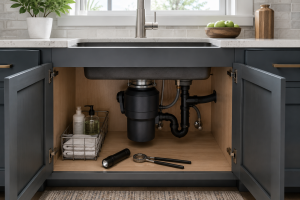
Introduction
A garbage disposal that hums but will not spin is usually telling you one thing: the motor is trying to run, but something is preventing movement. The cause may be a small utensil, food jam, stuck grinding plate, worn motor, or electrical problem.
This guide explains what homeowners can check safely, why humming happens, and when to schedule [garbage disposal repair](/garbage-disposal-repair/) before the motor burns out.
Why This Happens
A disposal uses an electric motor to spin a grinding plate inside the chamber. Food is broken down and flushed through the drain with water. If the plate cannot move, the motor may hum because it is energized but stuck.
Common causes include utensils, bones, pits, grease buildup, fibrous food, hard scraps, a jammed flywheel, overheated motor, failed reset, clogged drain, worn bearings, or a failing motor. Because disposals are connected to plumbing and electricity, safe shutdown matters more than forcing the unit to run.
Step-by-Step Troubleshooting
1. Turn It Off Immediately
If the disposal hums, turn the wall switch off. Do not keep flipping the switch. A jammed disposal can overheat quickly and damage the motor.
2. Cut Power Before Inspection
Unplug the disposal if it has a cord under the sink. If it is hardwired, turn off the breaker. Confirm the wall switch no longer activates the unit before looking into the drain opening.
3. Never Put Your Hand Inside
Use a flashlight to look into the chamber. Remove visible items only with tongs or pliers. Never use fingers, even when power is off. Sharp edges and stuck parts can injure your hand.
4. Check for Foreign Objects
Look for spoons, forks, bottle caps, screws, coins, bones, fruit pits, or broken glass. Remove anything visible with tongs. If glass may be present, stop and call for service.
5. Use the Reset Button Once
Many disposals have a reset button on the bottom. After the unit cools, press reset once. If it immediately trips again or the disposal still hums, do not keep resetting it.
6. Try the Manual Jam Tool
Some disposals include a bottom socket for a manufacturer-supplied wrench or hex key. With power off, use the tool exactly as the owner’s manual describes to move the flywheel back and forth. If it will not move, stop.
7. Run Cold Water
After a jam clears, run cold water before and during a short test. Cold water helps move food waste through the drain. If the sink backs up, the problem may be a drain clog, not only the disposal.
8. Check the Dishwasher Connection
If the dishwasher drains through the disposal, a disposal or drain clog can affect dishwasher drainage. If both the sink and dishwasher back up, you may need [dishwasher repair](/dishwasher-repair/) or plumbing help depending on the source.
9. Avoid Chemical Drain Cleaners
Do not pour harsh drain cleaner into a disposal. Chemicals can damage seals, splash back, sit in standing water, and create safety risks. Mechanical clearing or professional diagnosis is safer.
10. Stop if the Motor Smells Hot
A hot electrical smell, smoke, repeated humming, or a reset button that keeps popping can point to motor or wiring failure. Leave the disposal off and schedule service.
Safety Tip
Turn off power before any inspection. Never reach into the disposal chamber. Do not work on wiring under the sink if the area is wet. If the unit leaks from the body, trips the breaker, or smells burnt, stop using it.
When DIY Should Stop
DIY should stop when the jam tool will not move, glass is inside, water leaks from the disposal body, wiring is wet, the breaker trips, or the unit hums after one reset. Professional [appliance repair](/appliance-repair/) is safer when electrical, motor, drain, or mounting issues are involved.
Repair vs. Replace Guidance
Repair usually makes sense: The disposal is newer, not leaking, and the issue is a simple jam, reset, switch, mounting, or drain connection problem.
Get a diagnosis first: The disposal hums intermittently, drains slowly, affects the dishwasher, or may have both a jam and a drain restriction.
Replacement may be smarter: The disposal is older, leaks from the body, smells burnt, has a failed motor, or needs repeated resets.
Cost Expectations
Garbage disposal repair cost depends on age, horsepower, access under the sink, wiring style, drain condition, dishwasher connection, mounting condition, and whether the unit is jammed or mechanically failed. A simple obstruction is very different from a leaking disposal body or failed motor. Confirm the cause before replacing the unit.
Appliance Lifespan Guide
Garbage disposal: 8-15 years. Priority: Use cold water and avoid hard or fibrous debris.
Dishwasher: 8-12 years. Priority: Clean the filter and protect the drain path.
Refrigerator: 10-15 years. Priority: Clean coils and protect door seals.
Dryer: 10-13 years. Priority: Clean lint screen, duct, and exterior vent.
Washing machine: 8-12 years. Priority: Avoid overloading and check hoses.
Maintenance Checklist
- Run cold water before, during, and after grinding.
- Feed scraps gradually.
- Avoid bones, pits, shells, utensils, grease, and fibrous waste.
- Keep hands out of the chamber.
- Clean the splash guard as needed.
- Use the disposal regularly to reduce sticking.
- Stop using the unit when humming continues.
- Review manufacturer guidance, such as official InSinkErator owner resources, for model-specific reset and care instructions: InSinkErator.
Brand-Specific Considerations
InSinkErator: many models include a reset button and manual jam-clearing socket, but the exact steps vary by model.
Moen: batch-feed and continuous-feed designs may use different activation and reset methods.
KitchenAid and Whirlpool: disposal symptoms can overlap with dishwasher drain problems when the dishwasher hose connects to the disposal.
GE and Frigidaire: mounting, splash guard, drain connection, and motor symptoms should be checked before replacement.
If your dishwasher also backs up, [dishwasher repair](/dishwasher-repair/) may be relevant. For broader kitchen help, see [kitchen appliance repair](/kitchen-appliance-repair/).
Why Choose Universal Appliance Repair
Universal Appliance Repair focuses on identifying whether the disposal is jammed, clogged, leaking, miswired, or mechanically failed. A technician can check the reset, motor, flywheel, mounting, drain connection, dishwasher hose, and safe operation. To get help, visit [schedule service](/schedule-service/) or check our [service areas](/service-areas/).
Key Takeaways
Stop DIY work if the unit smells burnt, leaks, trips power, contains glass, or stays jammed.
A humming disposal usually has power but cannot spin because of a jam, obstruction, overload, or motor issue.
Homeowners can safely check power, reset once, inspect with a flashlight, and remove visible objects with tongs.
Never put your hand inside a disposal.
About the Author
Universal Appliance Repair Certified Expert Team
The Universal Appliance Repair Certified Expert Team consists of experienced appliance repair professionals with more than 25 years of combined hands-on experience servicing residential appliances. Articles are reviewed using manufacturer guidance, current industry best practices, and practical field experience.
Editorial Standard
This article was technically reviewed for homeowner safety, practical troubleshooting value, and current appliance repair practices. Information is periodically updated, and recommendations are based on field experience, manufacturer guidance, and industry best practices.
Homeowner Actionability Score
Total score: 24/25.
Problem clarity: 5/5. The article explains why humming usually means powered but jammed.
Safe homeowner checks: 5/5. Checks focus on power-off inspection, reset, visible objects, and cold-water testing.
DIY stop points: 5/5. Electrical, glass, leak, motor, and repeated-reset risks are clear.
Professional service guidance: 5/5. The article explains when disposal, wiring, drain, and dishwasher connections need diagnosis.
Confidence and next steps: 4/5. Homeowners get safe actions, though internal jams and motor issues may require service.