First Find Out Which Arm Is Supposed to Move
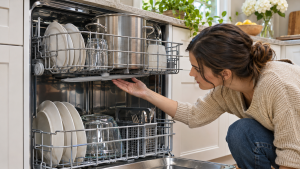
A dishwasher arm rotates because wash water exits its angled jets. It does not have a separate motor at the arm itself. That makes the first question more practical than a parts guess: was this arm meant to run on the selected program, and could it turn if water reached it? Whirlpool’s guidance says a Top Rack Only cycle may leave lower arms inactive. It also recommends spinning the accessible arm by hand before a cycle to find loading interference. A low rack, tall cutting board, or utensil hanging below the basket can stop a healthy arm.
The pattern on the dishes matters. If the bottom rack is dirty but the top is clean, check the chosen zone and the lower arm’s clearance. If both racks are dirty, look for a filter packed with food, too little water, a weak wash sound, or detergent that never dissolved. The food-left-on-dishes guide covers those wider cleaning problems. A pod left behind can also be a clue that wash water was not reaching the dispenser, not necessarily a broken detergent cup.
A damaged hub, split arm, blocked jet, circulation pump, or diverter may need a technician. The dishwasher repair service can diagnose the water-delivery path when a sensible loading and filter test changes nothing. Do not judge the arm by opening the door mid-cycle and reaching inside. Hot water can spray, and the pump may restart when the door closes. The safer evidence is rack-specific cleaning, the sound of circulation, and whether the arm is free to move with the machine off.
For model-specific service after these checks, see Dishwasher repair, Food left on dishes.
Reading the Clues
Try one controlled comparison. Load a modest number of dishes so both arms have clear space. Before closing the door, note the position of a visible arm, then run a normal full wash with the door shut. A change in arm position after the cycle can be suggestive, but it is not a perfect test because water may stop at a similar angle. Better evidence is whether the affected rack comes out clean and whether a steady washing sound follows the fill stage. If the machine is unusually quiet, hums without spraying, or leaves a dry detergent cup, do not keep adding detergent. Check the accessible filter and the water supply before arranging repair. A slow dishwasher cycle is a separate clue; a wet load after washing may involve heat or rinse aid even when spray is normal. Keep these symptoms distinct so the service visit starts in the right system.
Step-by-Step Troubleshooting
1. Pause, cool, and empty the risky pieces
Turn the dishwasher off and allow hot dishes and spray arms to cool. Remove knives, tall utensils, and glassware before putting a hand near the arm. Do not reach into a running machine.
2. Confirm the selected wash zone
Read the cycle name. Whirlpool notes that some Top Rack Only selections do not use the lower arm. Choose a normal full-rack program for a fair comparison.
3. Check clearance above and below each rack
Look for pan handles, cutting boards, ladles, or utensils that protrude into the arm’s path. Adjust only the user-adjustable rack height described in the manual.
4. Gently rotate the accessible arm
With power off, turn the arm by hand. It should move without striking a dish. If it catches, move the load. Do not force a stiff or cracked arm.
5. Clean and reseat the filter
Food in the filter can reduce wash performance or recirculate grit. Follow the model’s filter instructions; some assemblies should not be pried out.
6. Inspect visible spray openings
Look for obvious food or mineral buildup. Use only the manufacturer’s cleaning method and avoid drilling or widening the holes.
7. Notice fill and wash sounds
After closing the door, listen from outside. A fill followed by steady wash noise differs from silence, repeated humming, or a drain-only sound. Do not open the door to watch moving parts.
8. Compare rack-by-rack results
Run one normal, lightly loaded cycle with fresh detergent. Note which rack remains dirty, whether the dispenser opened, and whether a code appeared.
9. Stop if there is a leak or electrical warning
Water escaping the door, burning odor, repeated breaker tripping, or a loud grinding pump is a stop-use condition. Do not keep restarting the cycle.
10. Book a circulation diagnosis
If a clear arm still fails to wash its rack, share the model and your observations. A technician can test fill level, spray pressure, pump, diverter, and arm assembly.
Brand-Specific Considerations
Whirlpool and KitchenAid: Cycle zone selection and rack height can explain an inactive lower arm. Whirlpool advises checking free rotation and loading first; see Whirlpool appliance repair for model-specific service.
Bosch and Thermador: Tall items can block arms under adjustable racks. Some models use different spray-zone arrangements; refer to the exact manual before removing a filter or arm.
GE and Café: Filter and wash-zone designs vary. Note whether only the upper or lower rack is affected and whether the machine sounds as though it circulates.
LG and Samsung: Rack position, targeted wash options, and error codes matter. Photograph the code before clearing it and avoid assuming a stationary arm proves a failed pump.
Repair vs. Replace Guidance
A utensil in the arm path, wrong zone selection, or dirty filter calls for a loading or cleaning correction, not a new dishwasher. A damaged spray arm, diverter, or wash pump may be repairable when the machine is otherwise reliable and dry underneath. Ask for the part and cause to be identified before approving work. Replacement becomes more reasonable with major corrosion, repeated leaks, unavailable parts, and a high estimate on an older machine. A new dishwasher will not cure poor loading or household water-supply problems.
Cost Expectations
There may be no repair cost when a rack setting or tall utensil is the cause. A replacement arm, hub, diverter, or wash pump has a different parts and labor profile; the estimate should identify which part actually failed. If both racks clean poorly, ask whether fill level and filtration were checked before a pump is ordered. A dishwasher that leaks or corrodes underneath needs a different replacement discussion than one with a single underperforming rack. Avoid comparing online parts prices without the full model number and installation access.
Why Choose Universal Appliance Repair
Universal Appliance Repair can test circulation, water delivery, and rack-specific wash performance when the arm is clear but the problem repeats. Share the cycle and loading comparison so the technician can separate a wash-zone setting from a pump or diverter fault. The dishwasher repair service is appropriate for persistent poor spray, leaks, or pump noise after the safe checks.
Appliance Lifespan Table
Refrigerator: 10-15 years. Maintenance priority: clean coils, protect door seals, and keep temperatures steady.
Freezer: 10-20 years. Maintenance priority: keep vents clear, check gasket contact, and defrost models that require manual defrosting.
Dishwasher: 8-12 years. Maintenance priority: clean the filter, inspect spray arms, and avoid blocked drain paths.
Washing machine: 8-12 years. Maintenance priority: avoid overloading, use the right detergent amount, and inspect hoses.
Dryer: 10-13 years. Maintenance priority: clean the lint filter, vent path, and exterior termination.
Range or oven: 10-15 years. Maintenance priority: keep burners, igniters, caps, racks, and controls clean.
Maintenance Checklist
- Leave space above and below both racks for arm rotation.
- Clean the owner-accessible filter on the model’s schedule.
- Keep long utensils from falling through baskets.
- Use the cycle that washes the loaded racks.
- Inspect visible arm openings without scraping or drilling them.
Safety Section
Never reach into a running dishwasher or defeat the door switch to watch the arms. Hot water, detergent, sharp glass, and moving parts can injure you. Let the tub cool before touching an accessible arm. Stop using the machine if it leaks, grinds, smells hot, or trips a breaker. Do not remove the toe kick or test a live pump as a homeowner check.
What to Tell the Technician
Report the model number, affected rack, selected cycle, what blocked or did not block the arm, whether the arm turned freely by hand, filter condition, wash sound after filling, dispenser result, and any error code. A photo of the loading pattern helps distinguish a spray problem from a placement problem.
Key Takeaways
- A stationary-looking arm is not proof of a broken motor.
- Check wash-zone selection and rack clearance first.
- A clean filter and one normal test cycle provide better evidence.
- Persistent rack-specific failure needs water-delivery diagnosis.
Homeowner Actionability Score
24/25. Homeowners can safely check loading, cycle choice, filter, visible openings, and rack-specific results without opening panels or bypassing the door switch.
Editorial Standard
This article was checked against manufacturer guidance and the Universal Appliance Repair Knowledge Base v6.0 for safe homeowner actions, clear stop points, and source accuracy.
Sources and Further Reading
Author Information
The Universal Appliance Repair Certified Expert Team consists of experienced appliance repair professionals with more than 25 years of combined hands-on experience servicing residential appliances. Articles are reviewed using manufacturer guidance, current industry best practices, and practical field experience.