The Latch Is Only One Part of the Closing Path
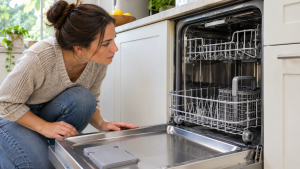
A dishwasher door closes against a tub opening that has to remain square, with both racks entirely inside. The latch cannot pull a protruding roasting pan or a lower rack into the cabinet for you. Whirlpool lists items caught between seal and tub, rack contents that project outward, seal debris, a damaged latch, and leveling as possible causes of a door that will not close. GE also points to installation and adjustable upper-rack position. These are better first questions than ordering a latch on sight.
The moment the symptom began may narrow it. A door that stopped closing after a heavy load often has a simple loading obstruction. A door that changed after new flooring, a countertop replacement, or dishwasher installation may have cabinet alignment or leveling trouble. A door that clicks but releases every time, even with empty racks, is more likely to need latch or strike inspection. Do not push harder to make a test cycle run: a door that is not sealed can release water onto flooring and cabinetry.
This is different from a dishwasher that latches but will not fill or a machine that leaks from underneath. A spray-arm clearance problem may share the same protruding utensil, but a failure to latch is a door-path clue first. The dishwasher repair service can inspect a persistent latch, hinge, or installation issue without relying on repeated wet cycles.
For model-specific service after these checks, see Dishwasher repair, Dishwasher not filling.
Reading the Clues
Stand in front of the dishwasher with it off. Look along both door edges as the door approaches the tub; you may see a utensil handle or rack wheel contacting the frame. Pull the racks out, remove the obstructing item, then roll them back along their rails. Some adjustable upper racks sit unevenly when only one side is raised. Check the model instructions before changing rack height. A piece of food or a label trapped on the gasket can prevent even contact; wipe only the accessible area. If the tub opening looks skewed relative to the door, do not loosen mounting screws or pull the unit from its cabinet. Record whether the latch fails with the dishwasher empty and whether the door gap is symmetrical. That comparison gives a technician much better evidence than another forced start.
Step-by-Step Troubleshooting
1. Stop the cycle and dry any water
Turn the dishwasher off. If water is on the floor, dry it and stop further cycles. Do not work around wet outlets or wiring.
2. Unload the door path
Remove a pan handle, long utensil, or large board touching the door. GE notes items protruding through a lower rack can keep it from rolling fully in.
3. Roll both racks fully home
Check that wheels sit on their tracks and neither rack is backward or tilted. Follow the manual for any adjustable upper rack.
4. Inspect the cool seal area
Remove visible food or labels around the tub rim and gasket with a soft damp cloth. Do not pull out or stretch the seal.
5. Look at the door gap
An even gap is different from a door that sags or contacts one corner. Photograph an uneven gap instead of pressing against it.
6. Close once with ordinary pressure
Listen for a normal latch engagement. A door that springs back or needs a slam has not passed this check.
7. Check for a changed installation
If the dishwasher was recently moved or new flooring or cabinetry was installed, note that for service. Whirlpool says the unit must be level and square in its opening.
8. Separate latch from control settings
If the door catches securely but Start does nothing, check Control Lock, Delay, and selected cycle in the manual. Never wedge the door switch closed.
9. Avoid a leak test with a suspect door
Do not run a full wash to see whether water escapes if the latch or seal remains questionable. Inspect it while off and call for service.
10. Schedule repair for a repeat failure
A technician can inspect latch, strike, hinge, tub alignment, seal, and switch using the model number. Describe whether it closes empty and where the gap appears.
Brand-Specific Considerations
Whirlpool and KitchenAid: Whirlpool highlights protruding rack items, seal debris, leveling, and latch damage. Some models with automatic door-opening dry features have model-specific reset behavior; do not assume every door uses it.
GE and Café: GE advises checking both sides and top of the door, rack position, and installation. Adjustable upper-rack models need both sides seated at the same height.
Bosch and Thermador: Handle design and installation tolerances vary. Do not remove the dishwasher or alter its cabinet mount just to change latch engagement.
Samsung and LG: Door errors and cycle-start messages vary by model. Record the exact code after a normal closure attempt; avoid a generic online reset sequence.
Repair vs. Replace Guidance
Moving a pan or reseating a rack costs nothing. A damaged latch, strike, hinge, or seal may be worth repairing on an otherwise healthy dishwasher. A tub that is distorted, repeated water damage, corrosion beneath the unit, unavailable parts, or several expensive failures can favor replacement. If the root cause is an out-of-square cabinet opening, a new dishwasher may have the same closing problem. Have installation and door geometry checked before using a replacement quote as the diagnosis.
Cost Expectations
An obstructing utensil or misplaced rack needs no part. Latch, strike, hinge, seal, and installation corrections have different costs, and an out-of-square tub opening may involve cabinet or installation work. Ask a technician to identify the interference with empty racks before approving a latch replacement. A poor seal can create floor damage that is more expensive than the original part.
Why Choose Universal Appliance Repair
Universal Appliance Repair can check door fit, rack travel, latch engagement, and sealing when an empty dishwasher still will not close. Share photos and note recent cabinet or flooring changes. The dishwasher repair service is appropriate for a persistent latch or leak rather than another forced wash.
Appliance Lifespan Table
Refrigerator: 10-15 years. Maintenance priority: clean coils, protect door seals, and keep temperatures steady.
Freezer: 10-20 years. Maintenance priority: keep vents clear, check gasket contact, and defrost models that require manual defrosting.
Dishwasher: 8-12 years. Maintenance priority: clean the filter, inspect spray arms, and avoid blocked drain paths.
Washing machine: 8-12 years. Maintenance priority: avoid overloading, use the right detergent amount, and inspect hoses.
Dryer: 10-13 years. Maintenance priority: clean the lint filter, vent path, and exterior termination.
Range or oven: 10-15 years. Maintenance priority: keep burners, igniters, caps, racks, and controls clean.
Maintenance Checklist
- Keep dishes and utensils within rack edges.
- Slide racks fully along their tracks.
- Wipe visible food from the gasket contact area.
- Keep both sides of an adjustable rack at the same setting.
- Report a new uneven gap or latch resistance before running another load.
Safety Section
Do not slam a dishwasher door, bend the strike, bypass the door switch, or run a cycle when the door will not seal. Hot water and detergent can escape from a poor seal. Stop use if water reaches the floor, cabinet wiring, or an outlet. Close an accessible water shutoff only if it can be reached without touching electrical equipment. Internal latch, wiring, hinge, and mounting work belongs to qualified service.
What to Tell the Technician
Share the model, whether the door closes with empty racks, which rack or item contacts the frame, whether the gap is even, any recent installation or flooring work, leak location, and whether Start responds after a normal click. Photos of the side gap and rack arrangement can help.
Key Takeaways
- Clear rack and dish interference before blaming the latch.
- Wipe accessible seal debris and check whether the gap is even.
- Do not force or bypass a door that will not catch.
- A repeat failure with empty racks needs latch or alignment diagnosis.
Homeowner Actionability Score
24/25. Homeowners can identify common loading and seal obstructions without disassembly; persistent latch and cabinet geometry problems need service.
Editorial Standard
This article was checked against manufacturer guidance and the Universal Appliance Repair Knowledge Base v6.0 for safe homeowner actions, clear stop points, and source accuracy.
Sources and Further Reading
Author Information
The Universal Appliance Repair Certified Expert Team consists of experienced appliance repair professionals with more than 25 years of combined hands-on experience servicing residential appliances. Articles are reviewed using manufacturer guidance, current industry best practices, and practical field experience.