Introduction
An inaccurate oven can ruin baked goods, dry out meals, or leave food undercooked. Sometimes the oven is fine and the issue is rack position, preheat timing, or normal cycling. Other times, the oven needs calibration or repair.
This guide explains how homeowners can check oven temperature safely, what common symptoms mean, and when to schedule [oven repair](/oven-repair/) or [range repair](/range-repair/).
Why This Happens
Most ovens do not hold one exact temperature every second. They heat above and below the set point to maintain an average. That is normal. Trouble starts when the average temperature is consistently too high, too low, or unstable.
Common causes include incorrect settings, poor preheat habits, damaged door gaskets, bad temperature sensors, weak bake elements, weak gas igniters, failed relays, control board issues, convection fan problems, blocked vents, or calibration offsets. Gas ovens may heat poorly when the igniter is weak even if it still glows.
Step-by-Step Troubleshooting
1. Use an Oven Thermometer
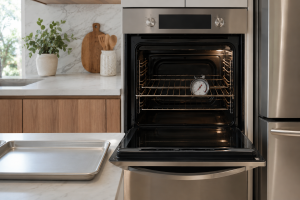
Place an oven thermometer on the center rack and set the oven to 350 degrees F. Let it preheat fully, then watch several heating cycles. Do not judge the oven from one quick reading.
2. Give the Oven Time to Stabilize
Many ovens beep before the entire cavity is evenly heated. Wait another 10-15 minutes after preheat before testing. Thick walls, stones, heavy pans, and large cookware can affect temperature recovery.
3. Average Several Readings
Write down the high and low readings over 20-30 minutes. If the average is close to the setting, the oven may be operating normally. If it stays far off, calibration or repair may be needed.
4. Check Rack Position
Food near the top may brown faster. Food near the bottom may overcook on the base. Use the center rack for testing and follow recipe rack guidance. Do not place foil on the oven floor unless the manual allows it.
5. Inspect the Door Seal
Look for torn, hardened, loose, or flattened gasket sections. A weak seal lets heat escape and can make the oven run longer or cook unevenly. Do not pull on the gasket if it is clipped into the liner.
6. Review Cooking Mode
Bake, convection bake, broil, air fry, proof, and self-clean use heat differently. Convection often cooks faster because a fan moves hot air. Make sure the selected mode matches the recipe.
7. Look at Heating Elements
On electric ovens, a bake or broil element should glow evenly when active. Blisters, dark spots, cracks, or partial glow can point to element failure. Do not touch elements during or after heating.
8. Watch Gas Ignition
On gas ovens, delayed ignition, gas odor, weak flame, or repeated clicking needs service. Stop using the oven if you smell gas. Igniters can weaken over time and cause low heat or long preheat.
9. Check Convection Fan Behavior
If convection cooking is uneven, listen for the fan. A failed or noisy fan can cause hot spots. Some fans cycle by design, so compare behavior with the owner’s manual before assuming failure.
10. Decide Between Calibration and Repair
Some ovens allow temperature offset adjustment in the settings. Use the owner’s manual. Calibration may help a consistent small offset. Repair is more likely when temperatures swing widely, heat is weak, or ignition is unsafe.
Safety Tip
Use oven mitts, keep children away, and avoid touching racks, probes, elements, or interior panels during testing. If you smell gas, turn the oven off, leave the area, and contact your gas utility or a qualified technician.
When DIY Should Stop
DIY should stop when the issue involves gas odor, delayed ignition, exposed wiring, sparks, breaker trips, damaged elements, control failure, or sensor replacement. Professional [appliance repair](/appliance-repair/) is safer when testing live circuits, gas components, or high-temperature parts.
Repair vs. Replace Guidance
Repair usually makes sense: The oven is under 10 years old and likely needs calibration, a sensor, gasket, igniter, element, fan, relay, or control diagnosis.
Get a diagnosis first: The oven is part of a slide-in range, wall oven, double oven, or premium appliance where replacement costs are high.
Replacement may be smarter: The oven is 12-15 years old, has repeated control failures, unavailable parts, major cavity damage, or multiple expensive issues.
Cost Expectations
Oven repair cost depends on fuel type, brand, age, access, part availability, and whether the problem is calibration, sensing, heating, ignition, airflow, or control related. A gasket or sensor issue is very different from a control board or gas ignition fault. Ask for diagnosis before approving parts.
Appliance Lifespan Guide
Range or oven: 10-15 years. Priority: Keep igniters, elements, seals, and controls clean.
Cooktop: 10-15 years. Priority: Clean burners and protect controls.
Microwave: 7-10 years. Priority: Keep vents clear and avoid door damage.
Dishwasher: 8-12 years. Priority: Clean the filter and inspect spray arms.
Refrigerator: 10-15 years. Priority: Clean coils and protect door seals.
Maintenance Checklist
- Use a separate oven thermometer for periodic checks.
- Let the oven fully preheat before judging temperature.
- Keep the door closed during baking.
- Avoid blocking vents with foil or oversized pans.
- Clean spills before they bake onto sensors or elements.
- Inspect the door gasket for gaps or damage.
- Use a food thermometer for meat, poultry, casseroles, and leftovers.
- Schedule service when temperature problems repeat.
Brand-Specific Considerations
Whirlpool, Maytag, KitchenAid, and Amana: sensors, bake elements, igniters, relays, and control calibration are common diagnostic areas.
GE and Hotpoint: temperature sensors, control boards, bake elements, and oven offset settings can affect accuracy.
Samsung and LG: control settings, convection fans, temperature sensors, and error codes can guide diagnosis.
Bosch, Thermador, and KitchenAid wall ovens: calibration, sensor accuracy, convection airflow, and control behavior should be tested carefully. For premium units, see [Thermador appliance repair](/thermador-appliance-repair/).
Record the model and serial number before booking service.
Why Choose Universal Appliance Repair
Universal Appliance Repair focuses on confirming whether the oven needs calibration or actual repair. A technician can test the sensor, elements, igniter, relays, controls, convection fan, door seal, and temperature performance. To get help, visit [schedule service](/schedule-service/) or check our [service areas](/service-areas/).
Key Takeaways
- Oven temperature problems can come from normal cycling, calibration, rack position, door seals, sensors, elements, igniters, fans, or controls.
- Homeowners can safely test with an oven thermometer and track several readings.
- Stop DIY work if there is gas odor, sparking, breaker trips, damaged elements, or delayed ignition.
- Repair is often worthwhile for sensors, igniters, elements, seals, fans, and controls on newer ovens.
About the Author
Universal Appliance Repair Certified Expert Team
The Universal Appliance Repair Certified Expert Team consists of experienced appliance repair professionals with more than 25 years of combined hands-on experience servicing residential appliances. Articles are reviewed using manufacturer guidance, current industry best practices, and practical field experience.
Editorial Standard
This article was technically reviewed for homeowner safety, practical troubleshooting value, and current appliance repair practices. Information is periodically updated, and recommendations are based on field experience, manufacturer guidance, and industry best practices.
Homeowner Actionability Score
Total score: 24/25.
Problem clarity: 5/5. The article explains normal oven cycling and signs of true inaccuracy.
Safe homeowner checks: 5/5. Checks focus on thermometers, preheat, racks, settings, seals, and visible parts.
DIY stop points: 5/5. Gas, electrical, ignition, element, and control risks are clear.
Professional service guidance: 5/5. The article explains when calibration is not enough.
Confidence and next steps: 4/5. Homeowners get clear testing steps, though live diagnostics require service.