The Fan May Be Doing Its Last Job
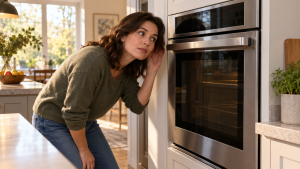
Two different fans can be heard around an oven. A convection fan moves air in the cooking cavity to even out temperature during a selected mode. A cooling fan moves air around electronics and cabinetry. GE Appliances explains that its control cooling fan is thermostat controlled and can continue after the oven is switched off. That sound alone does not mean the heating element or gas burner is still on.
A built-in oven may stay warm for a long time after broiling, self-clean, or several batches of baking. The fan may run until an internal temperature threshold is met, then stop without any input. Timing varies by model, room conditions, and how hot the oven became. Avoid using a universal number of minutes as a pass/fail test. The owner manual and a pattern compared with the same oven are more informative.
The safety boundary is continued heat, not merely continued sound. If the oven cavity is clearly heating after Off or the broiler remains active, follow the oven-will-not-turn-off guide. If an electric oven never warmed in the first place, the oven-not-heating guide covers that separate symptom. A failed cooling fan can also leave controls hot, but diagnosing its motor or relay requires internal testing.
For model-specific service after these checks, see Oven repair, Oven won’t turn off.
Reading the Clues
Listen from a safe distance and note where the airflow comes from. Air at a front or upper trim vent with the display at Off is different from a rear-cavity convection fan during Bake. Do not block vents with towels to make the sound stop; the airflow protects components. If you recently used self-clean, compare the model manual before assuming an unusually long cool-down is abnormal. A fan that starts on a stone-cold oven or runs indefinitely merits service even if cooking appears normal.
Step-by-Step Troubleshooting
1. Look for heat or smoke before investigating sound
If the oven is still actively heating after Off, smells electrical, smokes, or shows a fault, stop. For a gas odor, leave the area and follow the utility’s emergency instructions; do not operate switches.
2. Confirm the cooking command ended
Check that the display shows Off or End rather than a timed bake, delayed start, warming mode, or self-clean state. Photograph the panel before pressing more buttons.
3. Identify the fan by location
A cooling fan often exhausts near trim or the front vent; the convection fan circulates inside the cavity. Keep hands away from hot vent air and do not remove racks or covers for this observation.
4. Recall the last cooking mode
Broil, self-clean, and long baking can leave more residual heat than a short warm-up. A fan that stops after cool-down following these modes may be doing normal protection work.
5. Use the model manual for expected operation
GE and other manufacturers describe after-run cooling, but exact behavior varies. Search the manual by model number for cooling fan, convection fan, and post-cycle operation rather than using a generic video.
6. Let the door stay in its intended position
Do not prop open or force a locked self-clean door just to quiet the fan. Follow the manual’s cooling instructions. Keep children away from hot exterior trim.
7. Observe once as the oven cools
Make a note of when cooking stopped and when fan noise stopped. You do not need to stand beside it continuously. A model-specific fan may cycle on and off as a thermostat responds.
8. Compare a cold oven later
When the appliance is fully cool and idle, listen again. A fan that starts immediately from cold, runs continuously without recent cooking, or returns unpredictably should be evaluated.
9. Do not repeatedly reset the breaker
A breaker reset can mask a fault and erase a code. If the breaker trips, or the fan behaves abnormally after one normal cool-down, leave the oven off and request diagnosis.
10. Give the technician the heat-and-fan timeline
Report whether only air movement continued or the cavity kept heating, the cooking mode used, the fan location, any error, and the time to stop. Those details help separate normal cooling from a sensor, fan, relay, or control fault.
Brand-Specific Considerations
GE: GE Appliances says a thermostat-controlled cooling fan may run during baking and after Off. The model manual remains the guide to expected duration and location.
Bosch and Thermador: Built-in ovens often have dedicated cabinetry and control cooling. Do not block trim vents or pull a heavy oven from its cutout to investigate noise.
Wolf and Viking: Convection modes and cooling strategies differ by model. Note whether the sound is from the cooking cavity or the control vent before seeking service.
Whirlpool and KitchenAid: Check for timed cooking and self-clean states. A cooling fan after cooking is not equivalent to a heating element that ignores Off.
Repair vs. Replace Guidance
Normal cool-down needs no repair. A failed fan, sensor, or control may be worth repairing on a well-kept wall oven, particularly when cabinetry makes replacement expensive. Ask the technician whether the fan itself, a temperature signal, or a control output is at fault before buying a part. Replacement becomes more attractive with multiple costly failures, obsolete controls, or a severely damaged oven. Active heat after Off is a stop-use issue regardless of age.
Cost Expectations
The cost of an abnormal fan repair depends on whether the fan motor, a sensor, thermostat, wiring, or control is responsible. A built-in wall oven may require careful removal for testing, which changes labor more than the sound itself suggests. Ask for an estimate only after the model’s normal cool-down has been ruled out. A number quoted for a fan without confirming that it has failed is not a useful comparison.
Why Choose Universal Appliance Repair
A technician can compare the observed timing with model-specific operation and test the cooling circuit without blocking airflow or disturbing a hot oven. Universal Appliance Repair’s oven service is appropriate when the fan starts cold, never settles after cooling, or comes with a fault code. Continued heating after Off needs a more urgent shutdown and diagnosis than fan noise alone.
Appliance Lifespan Table
Refrigerator: 10-15 years. Maintenance priority: clean coils, protect door seals, and keep temperatures steady.
Freezer: 10-20 years. Maintenance priority: keep vents clear, check gasket contact, and defrost models that require manual defrosting.
Dishwasher: 8-12 years. Maintenance priority: clean the filter, inspect spray arms, and avoid blocked drain paths.
Washing machine: 8-12 years. Maintenance priority: avoid overloading, use the right detergent amount, and inspect hoses.
Dryer: 10-13 years. Maintenance priority: clean the lint filter, vent path, and exterior termination.
Range or oven: 10-15 years. Maintenance priority: keep burners, igniters, caps, racks, and controls clean.
Maintenance Checklist
- Keep the oven’s exterior cooling vents unobstructed.
- Follow the manual’s self-clean and cool-down instructions.
- Keep cookware and towels away from hot trim.
- Note a new fan sound or change in usual after-run time.
- Clean spills only after the appliance cools.
Safety Section
Do not cover vents, remove a wall oven from cabinetry, or probe fan wiring. Hot vent air can burn even when the display reads Off. If the cavity continues to gain heat after Off, shut the oven down safely and arrange service. If you smell gas, leave the area and follow utility emergency instructions; do not touch a breaker or switch. Smoke or an electrical smell is also a stop-use condition.
What to Tell the Technician
Provide the model number, last cooking mode and temperature, how long the oven ran, where air or sound came from, whether the display read Off, whether cavity heat continued, and any fault code. Mention if the oven was cold when the fan started. A short recording can distinguish a cooling fan from rattling or grinding.
Key Takeaways
- A cooling fan can keep running after an oven is turned off.
- Distinguish front-vent airflow from the cavity’s convection fan and from continued heat.
- Let the model complete its normal cool-down with vents clear.
- Continued heat, odor, or fan operation from cold calls for service.
Homeowner Actionability Score
24/25. The reader can identify a likely normal cooling pattern, record timing, and separate a fan noise from a dangerous continued-heat fault without opening the appliance.
Editorial Standard
This article was checked against manufacturer guidance and the Universal Appliance Repair Knowledge Base v6.0 for safe homeowner actions, clear stop points, and source accuracy.
Sources and Further Reading
Author Information
The Universal Appliance Repair Certified Expert Team consists of experienced appliance repair professionals with more than 25 years of combined hands-on experience servicing residential appliances. Articles are reviewed using manufacturer guidance, current industry best practices, and practical field experience.