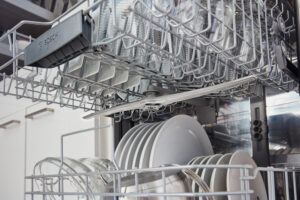
How a Dishwasher Dries Dishes
For a dishwasher to effectively dry your dishes, it needs to use enough heat, airflow, and the right water temperature at the end of the wash cycle. If one of these three things isn’t working properly, your dishes won’t dry correctly and can still contain moisture.
Here are some of the most important steps that describe how dishwasher drying works:
Heated Dry Cycle
The dishwasher heating element heats the air inside the dishwasher during the heated dry cycle. The heat allows moisture to evaporate from the dishes. If the heating element is weak or broken, the drying performance drops.
Condensation Drying
With condensation drying, dishes remain hot, and moisture gathers on the cooler walls of the dishwasher and drains away. This method saves energy, but requires accurate water temperature plus sufficient airflow to function properly.
Role of Rinse Aid
Rinse aid helps to ensure water slides off of plates, glasses, and utensils as opposed to forming droplets. When there is a lack of rinse aid, water moisture can stick to surfaces, resulting in fog, spots, and wet dishes, even after completion of the cycle.
Importance of Hot Water
For your dishwasher to operate, it requires hot water to evaporate moisture. If the water is cold, evaporating moisture will be almost impossible and cause the dishes to remain wet even when the cycle is complete.
Common Reasons Your Dishwasher Isn’t Drying
Problems with drying could be caused by simple habits or old parts. Below are common reasons why dishes remain wet, what problems affect drying, and when the problem is beyond wear and tear.
Rinse Aid Dispenser Empty or Clogged
If the rinse aid runs out or the dispenser gets clogged, the dishes cannot slide off the water. This is one of the common dishwasher not drying causes that usually leaves glasses and plates wet.
Heating Element Failure
A broken heating element won’t get hot enough to evaporate the moisture. This can cause the dishwasher to take too long to dry or may even leave the dishes wet, cycle after cycle.
Faulty High-Limit Thermostat
High-limit thermostats regulate heat. If the high-limit thermostat becomes faulty, it shuts the heat off early, and the dishwasher finishes the cycle, but the moisture will not have completely dried.
Overloading the Racks
When you overload the dishwasher, the airflow over the dishes is blocked. Water gets trapped, and heat can’t reach all the surfaces, so the dishes dry unevenly and create damp spots in the dishwasher.
Plastic Items Retaining Moisture
Compared to glass and metal, plastic cools off quicker, and because it does not retain heat, water is likely to stay on plastic containers and lids even after the dishwasher has completed the drying cycle.
Incorrect Wash Cycle Selection
Eco or air-dry cycles use less heat to save energy. These cycles do save energy, but they often leave dishes damp unless users deliberately choose heated drying.
Is It a Safety Concern If Dishes Stay Wet?
Wet dishes after the wash cycle do not usually pose a safety concern. Just because cups or plates come out wet after a wash cycle does not mean there’s a serious safety issue. Usually, this issue is related to the dishwasher’s drying function.
If the issue relates to the dishwasher heating element problem, it should not be ignored. A worn or damaged dishwasher heating element may not get hot enough to operate the dishwasher. The dishwasher literally works harder, increasing the wear and tear on the parts and decreasing the efficiency of the dishwasher overall.
In certain cases, the heating system’s electrical components may also suffer damage. Although dishwasher overheating is rare, damaged wires or malfunctioning controls should always be inspected by a technician. Addressing drying issues early protects internal parts, ensures safe operation, and prevents minor problems from increasing to bigger and costlier ones.
What You Can Safely Check Yourself
There are several at-home checks you can do before seeking professional assistance when your dishwasher is not properly drying your dishes. These steps can help fix dishwasher not drying issues caused by improper use rather than significant mechanical failures.
Refill the Rinse Aid
When it comes to drying, rinse aid is very helpful because it allows the water to slide off the plates and glasses rather than stick to the surface and form droplets. If the rinse aid dispenser is empty, it could cause the dishes to remain wet. For better results, refill the rinse aid dispenser as part of the basic dishwasher troubleshooting steps.
Use the Heated Dry Setting
Many dishwashers come with an eco and air-dry option as a way to save energy. The way these modes save energy is by using less heat, so there may still be moisture left on your plates and utensils after a cycle. However, using the heated dry option is ideal because the warm air flowing in the dishwasher can evaporate the moisture completely.
Avoid Overcrowding the Racks
Overcrowding the dishwasher can block airflow and may trap water within the dishes. Even a working heater won’t dry the dishes if there are a lot of things packed in tightly. Leaving space between the dishes will help both the air and the water trapped within the dishes to escape.
Check Incoming Water Temperature
Dishwashers require hot water in order to dry properly. Before starting a cycle, run the kitchen tap until the water is hot. This allows the dishes to reach the required temperature to release moisture during the drying process.
Ensure the Door Seals Properly
If your dishwasher has a loose or damaged door gasket, heat will escape from the unit. Make sure the door is closed and sealed during the entire cycle. If you have tried everything, and the unit is still not drying, there may be internal parts that require a professional.
When You Need Professional Dishwasher Repair
Some drying issues cannot be resolved just by changing the load or adjusting the settings. If parts like the heating element or electrical components fail, they’ll need to be serviced or replaced by a professional. Many homeowners start looking for dishwasher repair near me if these warning signs start to pop up again and again and won’t go away.
You should book a professional service if you notice these issues:
- No heat at the end of the cycle, even though heated dry is selected and appears to be running properly.
- There is a burning or electrical smell coming from the dishwasher when it is running or right after a cycle ends.
- Drying is still incomplete after refilling rinse aid, changing cycles, and correcting loading habits.
- There are cracks, warping, discoloration, or breaks to the visible heating element inside the dishwasher tub.
These issues can indicate internal component failure that can worsen the longer you use your appliance. At this point, the safest move is to call appliance repair Southern California. A professional technician is trained to inspect and repair issues involving the heating element, thermostats, and wires.
Repair vs Replacement: Is It Worth Fixing?
When a dishwasher stops drying properly, homeowners wonder whether to fix it or buy a new one. There is no one-size-fits-all answer, as it depends on the age, condition, and dishwasher repair cost.
Repair
If a dishwasher is 8 to 10 years old and has had reliable performance until now, repair is often the smarter option. If the only issue is a problem with a heating element or a thermostat, repair costs are often quite reasonable, and in fact, repair often restores full drying performance and is less costly than replacing it.
Replacement
For older dishwashers or units that break down often, replacement may make more sense. If multiple parts are failing, or repair costs get to about half the price of a new dishwasher, replacement provides better value in the long run.
Is It Worth Fixing?
A professional diagnosis can aid homeowners in determining the repair vs replace dishwasher options. Knowing the true cause and expense allows homeowners to avoid spending money unnecessarily and helps protect the dishwasher’s long-term efficiency.
How to Prevent Dishwasher Drying Problems
Most dishwasher drying problems can be avoided with proper care and simple habits. For example, many homeowners experience poor drying due to buildup, blocked airflow, and lack of necessary maintenance. A few simple dishwasher maintenance tips can improve dishwasher performance, lessen the internal components’ workload, and keep the dishwasher functioning efficiently for a longer time.
The following tips can have a significant impact if done regularly:
- Run a monthly cleaning cycle: A monthly cleaning cycle can improve airflow and drying, and remove grease, mineral build-up, and remainders.
- Load dishes properly: Properly loading the dishwasher and leaving space between items can improve drying system airflow and help moisture escape.
- Clean the dishwasher filter regularly: Regularly cleaning dishwasher filters helps maintain consistent water flow and increases the efficiency of drying.
- Avoid stacking plastic items tightly: When loading plastic items, avoid stacking them tightly during loading to reduce the moisture that gets trapped.
- Check spray arms occasionally: To ensure even cleaning and drying, check spray arms from time to time to make sure they can rotate freely and aren’t blocked.
If you maintain these habits consistently, you can extend the life of your dishwasher and improve drying results. Many homeowners also use professionalappliance maintenance tips for planned kitchen care to avoid future problems and repairs.
Call Universal Appliance Repair for Dishwasher Issues
If your dishwasher is not drying your dishes, you may have a problem that requires professional attention. Some issues can be resolved with simple checks; however, if the problem persists, it may be a problem with the dishwasher’s heating, airflow, or circuitry that requires a technician. This is one of the areas where professional intervention is most important.
At Universal Appliance Repair, we offer dishwasher repair in Southern California that homeowners can trust to deliver straightforward, dependable solutions. Our technicians take the time to inspect the heating elements, thermostats, wiring, and airflow systems to determine the actual source of the issue. Our priority is to complete safe repairs to restore proper drying without unnecessarily replacing parts.
Professional diagnosis is important to prevent additional damage to the dishwasher. More energy efficiency is achieved, strain on internal parts is reduced, and the appliance’s overall lifespan is extended. Homeowners no longer have to deal with the constant guessing about wet dishes, without clear direction or repair recommendations.
If your dishwasher isn’t drying properly, we are ready to help. Contact us so we can perform a professional inspection and resolve the issue. Schedule your dishwasher repair in Southern California with the best service and enjoy your kitchen with clean, dry dishes and peace of mind.