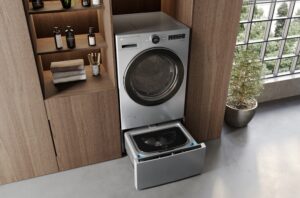
How a Washing Machine Fills with Water
The washing machine water inlet system controls how water enters the washer at the start of each cycle. This inlet system has many components that play a role in the filling process; your home’s water supply lines bring hot and cold water to the washer. If these lines have low pressure due to leaks or small blockages, flow weakens. Such conditions can slow down the process of washer filling and may delay the start of the wash cycle.
The inlet hoses bring water from the supply lines to the washing machine. These hoses need to remain unobstructed, unbent, and unblocked during the washer fill cycle. If the hoses are bent, clogged, or broken, the water will flow much more slowly, and the cycle time may be longer.
The inlet valve controls how much water enters the washer and when. The valve opens to let water in at the start of the cycle, and it closes when the correct water level is reached. If the valve is weak or if it’s partially blocked, the water enters the valve slowly, and there are delays in the washing process.
Another major component, a pressure sensor, detects the level of water in the washer and determines when to stop the filling cycle. A faulty sensor may cause the washer to fill too slowly or stop early, affecting its cleaning ability.
Low Household Water Pressure
If you notice low water pressure in your washer, it could be due to your home’s plumbing offering weak water flow. The following are plumbing supply issues that can affect how quickly your washer can fill up.
Plumbing Supply Issues
Issues with your home’s plumbing system can limit the amount of water that comes to the washing machine. Leaks, clogs, or issues with the inner plumbing system can cause the washing machine to have slow water flow. When such an event happens, the washing machine will take longer to fill.
Partially Closed Valves
There are water supply valves that are located behind the washer. These valves determine how much water goes into the washer. If the valves are not completely open, this can cause water flow to be restricted. This is a small issue that is easy to overlook, but it can cause filling the washer to take longer and cause each wash cycle to take longer than it should.
Older Plumbing Systems
Older houses have pipes that have buildups on the inside that have also reduced the flow. This issue affects the water pressure and the speed at which the water flows to the appliances. This means that the washing machine will take longer to fill up, as the machine itself should be working fine and have no visible problems.
Clogged Washer Inlet Hose Screens
Small mesh screens are used in hoses connected to the washer to trap dirt and debris before they can enter the washer. When a clogged washer inlet screen develops, it can impede the flow of water.
Sediment Buildup
Over months and years, the screens on your washer can trap particles in your water. Dirt, sand, and debris can create a thick layer of buildup that slows water flow. If water can’t pass through the screens as quickly, the washer can take longer to fill, and can cause a delay in starting the washing cycle.
Mineral Deposits from Hard Water
Mineral deposits from hard water stick to the washer’s screens and form layers of buildup that create an obstruction to water passing through the screen. If left untreated, the buildup worsens, and the washer takes longer to fill in each cycle.
Once the screens become clogged, the water flow will decrease. In extreme cases, a washer water hose blockage can completely stop the flow of water. However, in most cases, the flow is only partially reduced, and therefore, the performance of the washer is not as good as it should be. If cleaning the hoses does not help, many homeowners prefer to call washer repair experts to inspect and adjust the flow appropriately and in the safest manner.
Faulty Water Inlet Valve
During each cycle, the washer’s inlet valve controls how much water flows into the washer. When the washer does not reach the correct water level or fills slowly, such behavior can indicate a washing machine inlet valve problem. Below are the common problems that can impact valve function.
Electrical Control of Valve
The inlet valve opens and closes in response to electrical signals coming from the washer. During the washing cycle, the control board energizes the solenoid to open the valve. If there are any signaling or wiring problems, the valve could remain closed, and this would prolong the fill duration.
Mechanical Wear
With regular use of the appliance, the valve can become worn. The internal mechanisms that control the opening and closing of the valve can become sluggish. This could mean that water may flow in more slowly and fill times may take longer during wash cycles.
Restricted Valve Opening
Minerals and small debris can block the opening of the valve, and when this happens, water cannot flow through easily. Oftentimes, homeowners require washer valve repair service so that the valve can be fixed or replaced to allow the washer to fill in the right amount of time again.
Kinked or Damaged Water Supply Hoses
As part of the plumbing in your home, water supply hoses take water to the washing machine for each cycle. If there’s a washer hose kink problem, the water flow could be restricted. Here are a few reasons why hoses may limit water flow to the machine due to kinked or damaged water supply hoses.
Bent Hoses Behind the Washer
Washers are usually pushed against walls, which makes hoses get bent a lot. Even a slight bend at the wrong place can significantly reduce the rate at which water flows. This washing machine water hose issue can result in the washer taking a longer time to fill up.
Aging Hoses Collapsing Internally
As hoses age, they become more prone to damage. Washing machine hoses are susceptible to weakening and even collapsing. If a hose’s inner liner collapses, it can slow water fill times because there is less space for water to flow through the hose.
Improper Installation
Incorrect installation of hoses can lead to twisting and bending of the hoses. Such issues can create restrictions in the water flow into your washing machine. This kind of placement can even lead to damage in the hoses, which can cause delays in filling the washing machine.
Sediment Buildup from Hard Water
Over time, hard water can deposit minerals inside your washer. Washer mineral buildup may hinder the flow of water within the washer. Here are some problematic areas for this type of buildup.
Buildup in Valves
Minerals can settle inside the inlet valve and make it harder for the valve to open, limiting the amount of water flowing into the washer. Over time, as the buildup settles more and more, the inlet valve may stop functioning altogether, leading to slow filling and prolonged wash cycles.
Buildup in Hoses
Sediment can build up inside water hoses, particularly if the source water has a high mineral content. This type of washing machine sediment problem decreases the amount of space in a hose and makes it more difficult for water to flow through the hose at a normal rate.
The buildup inside multiple parts of the washer restricts the internal movements of water. It also impacts the rate at which the machine fills up and how water is evenly distributed. If the problem persists, homeowners should turn to appliance repair specialists to clear or replace the components affected and restore optimal functionality.
Safe Troubleshooting Steps Homeowners Can Try
It can be frustrating when your washing machine isn’t filling up properly. Before you call someone to repair your washer, there are some steps you can take at home by yourself. These steps for washing machine troubleshooting are safe and easy to follow, so checking some of these potential common problems can help you resolve the issue.
Check Water Supply Valves
To start your troubleshooting, make sure both hot and cold water valves are turned on. Valves can sometimes be turned off slightly, restricting water flow and making the washer take longer to start the cycles.
Inspect Hoses for Kinks
Look behind your washer and see if any of the hoses are kinked or if they’re pressed against the wall. Even a slight kink could cause a hose to fill at a slower speed, and fixing the kink could help the washer fill at a normal speed, as well as help the washer work better overall.
Clean Inlet Screens
Disconnect the hoses and shut off the water supply. Look for debris in the small screens inside the machine. If you clean these screens, obstructions can be removed, allowing more water to enter the washer during the fill cycle.
Ensure Proper Hose Connections
Ensure the hoses are tightly connected and properly positioned. Connections that are not secured properly can impact the flow of water. These checks can help with a washer filling slowly. However, if the issue persists, further examination may be necessary.
Signs You Need Professional Washer Repair
If you have done the basic checks on your washer and it is still not working properly, it is time to call in a professional. Here are some washer repair warning signs that indicate a problem inside the washer that is not easy to repair on your own.
Washer Takes Extremely Long to Fill
If your washing machine takes longer than normal to fill and you’ve already checked the inlet valves and fill hoses, then there may be internal issues. Such issues often mean parts are damaged and are causing cycle delays and poor cleaning. This could mean the problem is serious, and it may require an expert to fix it.
Water Flow Is Inconsistent
If there is an inconsistent flow of water when filling the machine, it may be something serious. Such an issue causes poor washing performance and is usually the result of an internal blockage or worn-out components. This problem usually requires the help of an expert.
Inlet Valve Malfunction
When the inlet valve is stuck, or it opens or closes at the wrong time, the washer won’t get water at the right pace. This causes the washer to fill slowly, or the washer may not fill at all, leaving loads unfinished. It is strongly recommended that homeowners leave this issue to a washing machine repair service to safely check and replace the broken valve.
Electronic Control Problems
Control boards and sensors determine the amount of water needed for each wash cycle. If these components are malfunctioning, the machine won’t fill up as needed. These are clear washer repair warning signs, and only a skilled technician can pinpoint the problem and restore normal washer performance safely.
Schedule Washer Repair in Southern California
If you’ve already checked the basics and your washer still fills slowly, it’s best to leave it to the professionals. We at Universal Appliance Repair know how tough it is to have laundry take longer than it should, and we know how the water flow problem disrupts daily activities.
This is why we offer honest and dependable washer repair services in Southern California. We thoroughly check the problems with the water supply line, inlet hose, valve, and even some of the machine’s internal parts to figure out exactly what the issues are. We do our best to prevent the problem from returning by putting our time and effort into a permanent solution rather than a temporary fix. Whether it is a valve problem, a blockage, or a control system problem, we will restore your washer to its normal functioning safely.
If the problem is not getting better or the washer is not functioning properly, then it is time to contact our appliance repair team for an inspection. With our trusted appliance repair services and support from a professional washing machine repair service, we are here to help you bring your washer back to smooth and efficient operation.