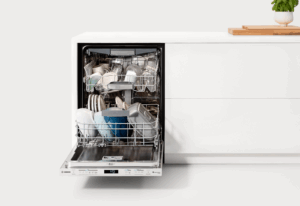
To understand how dishwasher cleaning works, it is essential to understand the key components of a dishwasher cycle. In the cleaning process, your dishwasher combines hot water and a cleaning detergent and sprays the mixture of water and detergent through rotating arms. This is designed to break apart and remove grease, food, and stains.
After the cleaning cycle is finished, the dishwasher rinse cycle uses fresh water and rinses the soap and the food particles from the dishes. This step is essential to avoid leaving food and soap residue behind on your dishes.
If the rinse cycle does not operate for any reason, such as low water pressure, too much detergent, or even clogged spray arms, leftover food particles may remain on your dishes. When the rinse water evaporates, the residue left behind forms a cloudy film on the dishes, rather than leaving your dishwasher clean and shiny.
Common Reasons Dishwashers Leave White Residue
The cloudy dishes and white residue left after a dishwashing cycle indicate that your dishwasher is not cleaning and rinsing as it should. Usually, these issues are simple and are related to water, detergent, and maintenance. Common causes include:
Hard Water Mineral Buildup
Calcium and magnesium are minerals that are left behind by hard water as it evaporates. These minerals form a chalky residue, particularly on glassware. In homes with higher-than-normal water hardness, mineral buildup is a major cause of white residue in dishwashers.
Incorrect Dishwasher Detergent
Using the wrong type or too much detergent can leave residue on your dishes. Detergents that do not match your water type may not rinse completely. If your detergent is not rinsing away entirely, even after multiple cycles, it can lead to cloudy dishes and dishwasher results, especially on your glasses and plates.
Empty or Malfunctioning Rinse Aid Dispenser
Rinse aid helps water run off dishes smoothly during the drying cycle. If the rinse aid dispenser isn’t working, water spots will be left on the dishes. As the water spots dry, they leave behind minerals. This makes dishes look dirty, even after a strenuous wash cycle.
Clogged Dishwasher Filter
Each cycle of the dishwasher filter collects food particles. While the dishwasher water filter is clogged, it cannot circulate the water. This leaves leftover detergent and minerals on the dishes, leading to visible residues that the dishwasher leaves on your dishes, even after normal washing cycles.
Heating Element or Temperature Issues
Dishwashers are designed to clean dishes with hot water. This is to ensure the detergent is dissolved and the dishes are sanitized. If the dishwasher heating element is faulty, the water temperature will remain unchanged. When this happens, the dishwasher will be unable to clean or rinse your dishes properly.
Is White Residue on Dishes a Safety Concern?
The white stuff on dishes is typically not dangerous. In most instances, this is a result of minerals left by evaporated water. This is especially common in homes with hard water and is known as hard water dishwasher film. While this is not really hazardous, it doesn’t usually look nice.
It is possible that repeated buildup is an indication that there may be an issue with the appliance. For example, issues with the washing process can be linked to inadequate rinsing, water that may not be heated enough, or issues with the detergent. In these cases, dishwasher residue safety is more about performance than risk.
If you find the issue early, it can help you keep your dishes clean and protect your unit from long-term build-up and decreased efficiency.
What You Can Safely Check Yourself
There are a few things you can try before calling a technician. These tips can assist with dishwasher troubleshooting and improving its cleaning performance.
Refill Rinse Aid
Rinse aid helps dishes dry by making water slide off. When it’s empty, water sits on the dishes, leaving minerals behind. This causes spotting and clouding. Keeping the dispenser filled improves dish appearance after every cycle and reduces residue.
Clean Dishwasher Filter
A dishwasher collects food particles using a filter. When it is dirty, it causes blockage, leading to poor rinsing and leaving food particles on dishes. When you regularly clean the filter, the dishwasher has better water flow and optimal washing performance.
Reduce Detergent Amount
It is possible that soap residue is building up on the dishes because too much detergent is being used in each cycle. Soap scum can build up over time. If this is the case for you, try using less detergent for a few cycles. This can be an easy fix for a dishwasher with residue.
Run Dishwasher Cleaning Cycle
Grease and minerals can build up on the insides of the dishwasher. This buildup can be removed by running a cleaning cycle with a dishwasher-safe cleaner. This can also help the dishwasher spray arms work better and rinse better, which means no more residue on dishes.
Check Water Temperature
For effective cleaning, hot water is essential. If the water is not hot enough, the detergent may not dissolve completely. As a result, washing is ineffective, and some soap residue may be left over. Checking your water temperature is essential to ensure that your dishwasher is able to wash and rinse your dishes properly.
When White Residue Means You Need Professional Repair
If you’ve done basic cleaning and adjustments and still have a white residue problem, it could indicate a more serious issue inside your dishwasher, and searching for dishwasher repair near me can help you find a technician who can inspect your appliance more closely and carefully.
Dishes Consistently Cloudy
Cloudy dishes after each wash cycle, even after you’ve cleaned the filter, changed detergent, and adjusted the detergent amount, indicate a bigger problem. There’s an underlying issue causing the dishwasher to not rinse dishes properly. Hiring a technician is necessary to inspect the inner parts and restore normal performance.
Spray Arms Not Spinning Properly
The arms in dishwashers rotate and evenly distribute water during the wash and rinse cycles. If the arms are blocked, not spinning, or unable to reach all the dishes, it may result in dirty dishes and residual detergent remaining on them at the end of the cycle, even if the cycle has run its full duration.
Water Not Heating During Cycle
Hot water is essential to cleaning properly. If your dishwasher is not heating the water, the detergent will not fully dissolve. This leads to ineffective cleaning and shows residue on the dishes after they have dried. This is especially common on glassware and plates.
Detergent Not Dissolving Fully
If you notice detergent remains in the dispenser or on the dishes, this usually indicates that the water flow or temperature is not at the required level for a full-cycle wash. This will also affect the dishwasher’s cleaning performance and will, in fact, leave a white residue on the dishes once the cycle completes.
If you spot these signs, it’s best to get it checked by professionals. Trusted appliance repair Southern California service can restore proper cleaning by inspecting and repairing key components such as the heating element, pump, and spray arms.
You can also book a service appointment by searching for dishwasher repair near me to resolve the problem and avoid further buildup.
Hard Water vs Dishwasher Problems: How to Tell the Difference
It is helpful to determine whether the problem is with water quality or with the dishwasher. This helps determine whether the issue can be fixed with some adjustments or if professional help is needed.
Signs of Hard Water Issues
A hard water dishwasher problem causes a thin white film on dishes that can easily be wiped off and usually occurs on shiny surfaces like glass. If results improved when you used a different detergent or added rinse aid, then you are experiencing a water quality issue.
Signs of Dishwasher-Related Problems
Internal issues with your dishwasher might create dishwasher mineral buildup that is harder to remove. It might also leave detergent residue or fail to clean the dishes. If you’ve adjusted your detergent, cleaned the filter, and used rinse aids with no improvement, you may need a technician to perform a more thorough inspection of your dishwasher.
How to Prevent White Residue on Dishes
Regular maintenance is the best way to prevent cloudy dishes and keep your dishwasher in working order. Also, avoid excess buildup, as it reduces your dishwasher’s cleaning efficiency each time you run it. Basic maintenance and care will keep your dishwasher in the best working order.
Following simple dishwasher maintenance tips can keep your dishwasher working properly and your dishes clean.
- First, clean your dishwasher filter.
- Second, use the recommended amount of detergent.
- Last, keep the rinse aid filled.
These tips will improve rinse quality and reduce mineral deposits on your dishes. Consider performing a cleaning cycle on your dishwasher every couple of weeks to prevent buildup. For better long-term care, consider appliance maintenance tipsto save money and keep your dishwasher working efficiently.
Call Universal Appliance Repair for Dishwasher Issues
If you have cleaned your dishwasher, checked the basics, and it is still leaving a residue, you may need to get help from a professional. Continuing problems can lead to inadequate cleaning and lower performance. In such cases, you need a reliable dishwasher repair in Southern California to help you solve the problems your dishwasher is experiencing.
If the dishwasher isn’t washing or cleaning as required, there might be other issues that simple fixes won’t solve. There are other issues with the dishwasher that may not be visible to the naked eye and are the reason it isn’t washing or cleaning as required. A technician from Universal Appliance Repair is trained to inspect these problems and repair other issues to ensure the dishwasher washes and rinses as required.
Our reliable appliance repair service will not only help you repair your appliance but also prevent further damage and extend its life. If the problem still persists, you maycontact us and schedule a service visit to get your dishwasher working again.